
Planning a community event comes down to four core phases: defining your purpose and audience, securing logistics and permits, mobilizing volunteers and vendors, and executing a detailed day-of timeline. The entire cycle typically spans 8 to 16 weeks, depending on scale, and demands equal measures of strategic foresight and adaptive problem-solving. When approached systematically, even first-time organizers can deliver memorable experiences that strengthen civic bonds and amplify cultural identity.
Community events serve as the connective tissue of neighborhoods and cultural groups. A well-executed gathering does more than fill calendars. It builds trust, sparks collaboration, and creates shared stories that endure long after the last tent comes down. But success hinges on disciplined planning. Underestimating timelines, overlooking regulatory requirements, or failing to communicate clearly with stakeholders can transform a promising concept into a logistical headache.
The difference between a mediocre turnout and a thriving event often lies in the details. You need clear goals from the start. Are you raising funds, celebrating heritage, fostering dialogue, or simply creating space for neighbors to connect? That answer shapes every subsequent decision, from venue selection to vendor contracts to promotional channels. Without it, you risk diluting your message and confusing your audience.
Modern event planners balance tradition with innovation. Certified expertise in crowd management, risk mitigation, and inclusive programming has become essential as gatherings grow more complex and expectations rise. Strategic innovation means leveraging digital registration tools, real-time communication platforms, and data analytics to streamline operations and enhance attendee experience. The goal is not perfection but preparedness: anticipating friction points, building contingency plans, and empowering your team to respond with confidence when the unexpected arrives.
Essential Tools and Resources for Community Event Planning
Before launching into event planning, assemble the right toolkit to streamline your workflow and avoid costly oversights. Modern community event organizing demands both digital platforms and traditional resources, each serving distinct functions throughout the planning lifecycle.
Digital Planning Platforms
Start with project management software like Asana, Trello, or to track tasks, deadlines, and team responsibilities in real time. These platforms enable collaborative planning where committee members can update progress, attach documents, and maintain accountability without endless email chains. For budgeting, dedicated tools such as EventMobi Budget Manager or comprehensive spreadsheet templates help you monitor expenses against projections, flag cost overruns early, and generate financial reports for stakeholders.
Communication platforms form your operational backbone. Slack or Microsoft Teams facilitate instant coordination among planning teams, while mass communication tools like Mailchimp or Constant Contact manage attendee outreach, registration confirmations, and post-event follow-ups. Video conferencing software becomes essential for remote planning meetings and virtual committee collaboration.
Essential Resource Checklist
Equip your planning team with these foundational tools:
- Vendor directories and contact databases specific to your region and event type
- Permit application templates and regulatory compliance checklists from local authorities
- Insurance documentation templates including liability waivers and certificate requirements
- Event timeline templates mapping milestones from initial planning through post-event wrap-up
- Risk assessment frameworks addressing safety, weather, accessibility, and cultural sensitivity considerations
- Volunteer management systems for recruitment, scheduling, and recognition
- Contract templates for venues, vendors, speakers, and service providers
Beyond digital tools, maintain physical resources including venue measurement tools, signage templates, emergency contact cards, and backup power solutions. Strategic innovation means selecting tools that integrate seamlessly, reducing duplicate data entry and creating a centralized information hub that any team member can access instantly when questions arise or decisions need quick validation.
Critical Considerations and Safety Protocols
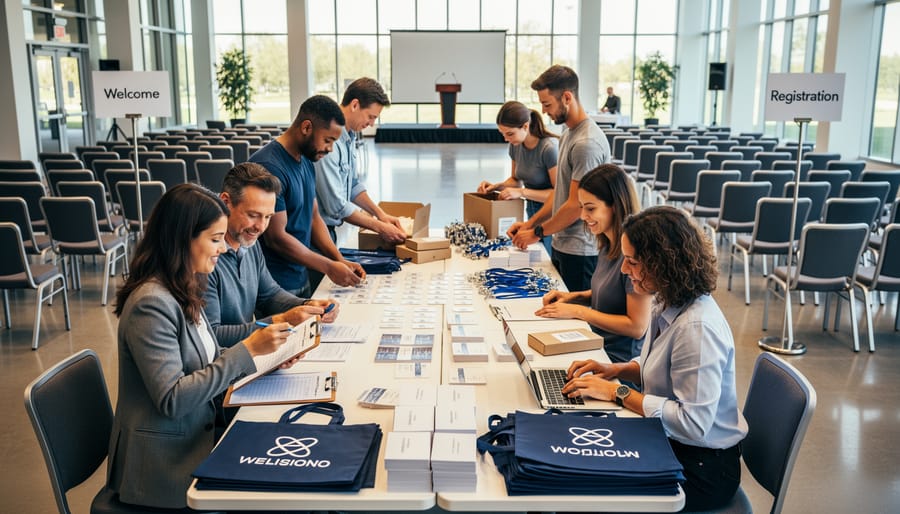
Before sending invitations or booking vendors, you must address several non-negotiable safety and compliance requirements that protect both attendees and organizers. Overlooking these critical areas can expose your organization to liability, regulatory penalties, or worse, preventable injuries.
Start with special events insurance that covers general liability, property damage, and liquor liability if you’re serving alcohol. Many venues won’t grant access without proof of coverage, and municipal permits often require minimum policy limits. Work with a broker who specializes in event insurance to identify gaps in your existing coverage, particularly if your event involves physical activities, vendors, or large crowds.
Accessibility compliance under the Americans with Disabilities Act isn’t just about wheelchair ramps. Planning an accessible event requires accessible parking, clear signage with high contrast, assistive listening devices, captioning for video content, accessible restrooms, and registration materials in alternative formats. Conduct a site walk-through well before the event date to identify barriers and arrange accommodations.
Emergency preparedness deserves the same attention as your meeting strategy. Develop written protocols for medical emergencies, severe weather, fire evacuation, and active threats. Designate trained staff to handle first aid, establish clear evacuation routes with posted maps, and coordinate with local emergency services if you expect more than 500 attendees. Keep emergency contact lists for all vendors, key staff, and venue management readily accessible.
Weather contingencies require specific triggers and backup plans. If your outdoor event faces rain, extreme heat, or storms, define exact conditions (temperature thresholds, wind speeds, lightning proximity) that will activate your contingency plan. Communicate those triggers to vendors and attendees in advance.
Food safety regulations vary by jurisdiction but generally require permits for any food service, proper refrigeration, handwashing stations, and certified food handlers. If you’re working with multiple caterers or allowing food trucks, verify each vendor’s permits and health inspection records.
Cultural sensitivity goes beyond good intentions. Consult with community representatives from the groups you’re serving to avoid scheduling conflicts with religious observances, choose appropriate music and decor, accommodate dietary restrictions, and ensure your programming respects cultural protocols. Certified event professionals with experience in diverse communities can help you navigate these considerations while maintaining authentic engagement.
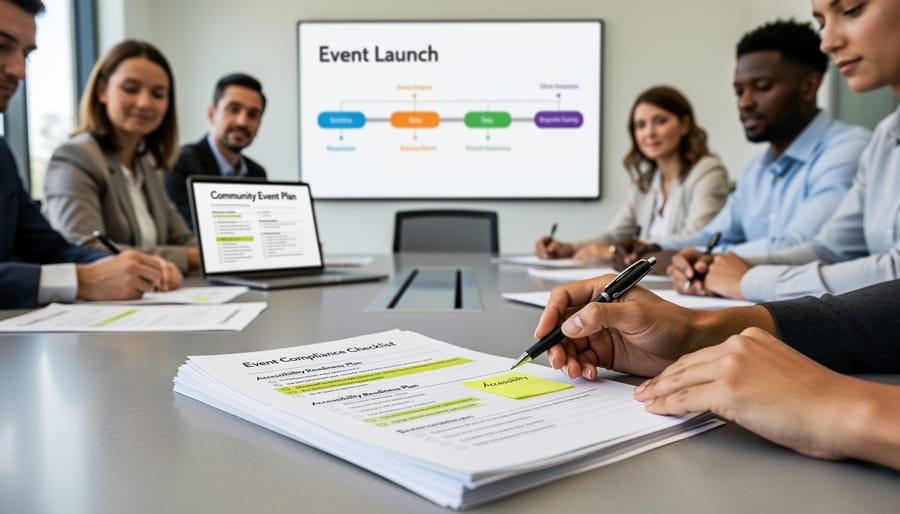
Step-by-Step Community Event Planning Process
Phase 1: Define Purpose and Set Objectives
Start by articulating exactly what you want your event to accomplish. A vague aspiration like “bring the community together” won’t guide your decisions. Instead, define a clear mission: Are you raising funds for a specific cause, celebrating a cultural milestone, educating residents about environmental issues, or fostering dialogue between neighborhood groups? Write a one-sentence mission statement that anyone on your team can recite.
Next, identify who needs to be in the room. Community events serve diverse stakeholders, neighborhood associations, cultural organizations, faith groups, environmental advocates, local businesses, and municipal partners. List your primary audience (those who must attend for the event to succeed) and secondary audiences (those whose participation adds value). For specialized gatherings like urban planning events this targeting becomes even more critical.
Translate your mission into measurable goals. Instead of “increase awareness,” specify “distribute 500 informational packets and secure 100 email sign-ups for our advocacy list.” Quantifiable targets might include attendance numbers, funds raised, volunteer commitments obtained, or partnerships established. Decide how you’ll measure success before you plan logistics.
Finally, consult stakeholders early. Schedule brief interviews or surveys with community leaders, potential attendees, and partner organizations. Ask what they need, what timing works, and what barriers might prevent participation. This needs assessment reveals practical constraints and cultural considerations that shape every subsequent planning decision.
Phase 2: Form Your Planning Team and Budget
Building the right team begins with identifying core roles your event requires. Start with a project manager who oversees timelines and coordinates all moving parts. You’ll need specialists for logistics, communications, volunteer coordination, and financial management. For larger events, consider bringing in certified professionals, event planners, safety coordinators, or accessibility consultants, whose expertise prevents costly mistakes and ensures compliance.
Recruit volunteers strategically based on their skills and connections within the community. Create clear role descriptions that specify time commitments and responsibilities. A well-structured team operates through defined decision-making authority: establish who makes final calls on spending, programming changes, and vendor selection to avoid delays when issues arise.
Your budget transforms abstract plans into concrete reality. Begin with a detailed expense spreadsheet categorizing costs: venue rental, permits and insurance, equipment and supplies, marketing materials, catering, entertainment, security, and a 10-15% contingency fund for unexpected needs. Track every projected cost against actual quotes.
Identify revenue streams early. Corporate sponsorships work when you offer clear benefits, logo placement, speaking opportunities, or community goodwill. Research grant programs from foundations, government agencies, and cultural organizations that align with your event’s mission. If charging admission, price tickets to balance accessibility with revenue goals, considering early-bird discounts and tiered options.
Reconcile income against expenses weekly. Adjust scope immediately if funding gaps emerge rather than hoping money materializes. Financial transparency builds trust with stakeholders and simplifies post-event reporting.
Phase 3: Select and Secure Your Venue
Venue selection shapes every aspect of your event experience. Start by calculating required capacity with a 20% buffer for flexibility. Visit potential locations during the same day and time as your planned event to assess lighting, noise levels, and foot traffic patterns.
Evaluate accessibility comprehensively: wheelchair-accessible entrances and restrooms, assistive listening systems, proximity to public transit, and adequate parking. Non-compliance with ADA requirements creates legal liability and excludes community members.
Compare total venue costs beyond rental fees. Factor in mandatory security deposits, setup and breakdown time charges, required insurance riders, janitorial services, and equipment rentals. Some community centers offer reduced rates for nonprofit events, while outdoor parks may require only permit fees.
Review contracts carefully before signing. Clarify cancellation policies, noise ordinances, alcohol restrictions, and exclusive vendor requirements. Secure general liability insurance that names the venue as an additional insured party.
Identify a backup venue for outdoor events, especially during unpredictable weather seasons. Confirm this contingency location well in advance and communicate both primary and alternative addresses in all promotional materials to prevent confusion.
Phase 4: Develop Programming and Logistics
Programming and logistics form the operational backbone of your event, this is where strategic vision becomes tangible action. Begin by developing a detailed schedule that sequences activities logically, allowing buffer time between segments and considering audience flow. Specialized programming requires different considerations: public affairs programming demands careful speaker vetting and balanced perspectives, while CBD-themed events require extra attention to vendor compliance and educational content accuracy.
Coordinate logistics using this timeline approach:
- Three months before: Finalize venue contracts, book headlining speakers or performers, and issue vendor RFPs for catering, AV equipment, and security services
- Six weeks before: Confirm all vendor contracts with detailed specifications, finalize event schedules, and test registration systems
- Two weeks before: Conduct venue walkthroughs with key vendors, confirm load-in and setup schedules, and distribute final run-of-show documents
- One week before: Brief all vendors and volunteers on their roles, conduct equipment tests, and verify parking arrangements and directional signage
Transportation logistics deserve particular attention. Map out clear arrival routes, designate drop-off zones for different groups, secure adequate parking or coordinate shuttle services, and ensure accessible pathways from parking to venue entrances. Your registration system should handle both advance and day-of ticket sales, accommodate different attendee categories, integrate with your attendance tracking, and provide backup options if technology fails.
Phase 5: Execute Marketing and Outreach
Start marketing six to eight weeks before your event to build momentum without overwhelming your audience. Create a core message that speaks to the specific benefits attendees will gain, community connection, cultural celebration, skill development, rather than generic event details.
Deploy multi-channel outreach that meets people where they are. Post regularly on social media platforms your target audience uses, share event listings in community newsletters and local websites, and distribute flyers at libraries, community centers, and relevant businesses. Partner with aligned organizations to cross-promote through their networks, exponentially expanding your reach.
Tailor your messaging for different cultural communities while maintaining consistent core information. Work with community liaisons to ensure translations are culturally appropriate, not just literal. Use imagery and testimonials reflecting the diversity of your intended audience.
Engage community ambassadors who can authentically promote the event within their networks. Personal invitations and word-of-mouth recommendations remain powerful drivers, especially in tight-knit communities. Create shareable content that makes promotion easy for supporters, graphics, short videos, compelling stories about what makes this event meaningful.
Phase 6: Coordinate Day-of-Event Operations

On event day, arrive early to oversee venue setup and verify that equipment, signage, and spaces match your floor plan. Conduct a brief all-hands meeting with volunteers and vendors to review roles, timelines, and emergency protocols. Designate a command center where your team can monitor registration flow, address vendor questions, and resolve unexpected issues in real time.
Equip key staff with two-way radios or a group messaging app to maintain instant communication across the venue. Walk the site regularly to spot problems before attendees notice them, restocking supplies, adjusting crowd flow, or rerouting traffic. Keep your contingency plans accessible and empower team leads to make quick decisions within their areas.
Throughout the event, balance proactive management with visible presence. Greet attendees, thank volunteers, and stay alert to safety concerns or operational bottlenecks. Document successes and challenges as they occur; these notes become invaluable for your post-event debrief and future planning cycles.
Measuring Success and Completing Post-Event Activities
The real work of community event planning extends beyond the closing remarks. Measuring success requires a systematic approach to data collection that starts while attendees are still engaged. Distribute feedback surveys before people leave, capturing immediate impressions when satisfaction and concerns are freshest. Digital tools like QR codes linking to brief online forms typically generate higher response rates than paper surveys, and they enable real-time data compilation.
Financial reconciliation demands the same rigor you applied during planning. Compare actual expenses against your budget line by line, noting variances and their causes. This analysis reveals which cost projections were accurate and where your estimating needs refinement. Document final attendance numbers, revenue streams, and any unexpected expenses. Share a transparent financial summary with key stakeholders and sponsors, demonstrating fiscal responsibility and building trust for future collaborations.
Stakeholder debriefings gather qualitative insights that numbers alone cannot capture. Schedule meetings with your planning team, major vendors, sponsors, and community partners within two weeks of the event. Ask what worked well, what challenges arose, and what they would change. These conversations often surface operational issues that attendees never noticed but that strained your team or compromised efficiency.
Thank-you communications serve both relationship-building and documentation purposes. Send personalized acknowledgments to sponsors, volunteers, speakers, vendors, and attendees within one week. Reference specific contributions or memorable moments to demonstrate genuine appreciation rather than generic gratitude. These touchpoints strengthen community bonds and increase the likelihood of continued engagement.
Compile a comprehensive impact report that synthesizes quantitative data, qualitative feedback, and photographic documentation. Include attendance demographics, survey results, goal achievement metrics, media coverage, and testimonials. This report becomes an invaluable asset for grant applications, sponsor pitches, and internal planning reviews. Archive all planning documents, contracts, vendor evaluations, and lessons learned in an organized system that future event teams can access, transforming institutional knowledge into lasting organizational capacity.
Frequently Asked Questions About Community Event Planning
Planning a community event raises many practical questions, especially for first-time organizers navigating unfamiliar terrain. The following answers address the most common concerns we encounter when working with community groups, cultural organizations, and civic associations.
How far in advance should I start planning a community event?
For small gatherings (under 100 attendees), begin at least 8-12 weeks before your event date. Medium to large events require 4-6 months of lead time to secure venues, coordinate vendors, obtain permits, and build effective promotional campaigns.
What’s a realistic budget for a community event?
Budget requirements vary widely based on scale and programming, but expect $15-30 per attendee for basic gatherings including venue, refreshments, and materials. Larger festivals with entertainment, catering, and professional services typically range from $50-150 per person, though sponsorships and grants can offset these costs significantly.
Do I need insurance for a community event?
Yes, general liability insurance is essential and often required by venues, municipalities, and vendors. Most venues mandate $1-2 million in coverage, and policies typically cost $200-500 for single-day events, providing protection against accidents, property damage, and potential lawsuits.
How do I ensure cultural inclusivity at my event?
Consult directly with representatives from the cultural communities you’re serving during the planning phase, respect religious observances and dietary restrictions, provide multilingual materials when appropriate, and create programming that authentically represents diverse voices rather than tokenizing cultural elements.
What permits do I typically need?
Common permits include facility use permits, noise permits for amplified sound, food service permits if serving meals, alcohol licenses for beverage service, and street closure permits for outdoor events. Contact your local municipality at least 60-90 days in advance, as processing times vary.
How many volunteers should I recruit?
A general rule is one volunteer for every 20-25 attendees, with additional support for registration, setup, breakdown, and specialized roles like childcare or accessibility assistance. Always recruit 20-30% more than you think you’ll need to account for last-minute cancellations.
When should you bring in professional event planners? If your event exceeds 200 attendees, involves complex logistics like multiple venues or stages, requires substantial fundraising, or holds significant reputational stakes for your organization, certified professionals provide strategic innovation and risk management that protects your investment. They navigate permitting mazes, negotiate vendor contracts, coordinate safety protocols, and troubleshoot real-time challenges with experience you can’t replicate through volunteer efforts alone.
Accessibility compliance deserves special attention beyond simple ADA requirements. Ensure wheelchair-accessible routes connect all event areas, provide ASL interpreters or captioning for presentations, offer sensory-friendly spaces for attendees with autism or anxiety disorders, and create gender-neutral restroom options. These considerations aren’t just legal obligations but fundamental expressions of community values.
Successful community event planning transforms abstract ideas into memorable experiences that strengthen neighborhoods, honor cultural traditions, and build lasting connections. Throughout this guide, you’ve seen how strategic planning, from initial goal-setting through post-event analysis, creates the foundation for events that truly engage and inspire.
The complexity of modern community events demands more than enthusiasm alone. Professional diligence in addressing accessibility requirements, safety protocols, vendor coordination, and cultural sensitivity ensures your event welcomes everyone while meeting legal obligations and managing risks effectively. Certified expertise brings efficiency to the planning process, helping you avoid costly mistakes and identify opportunities you might otherwise miss.
Whether you’re organizing a neighborhood festival, cultural celebration, or environmental awareness gathering, the principles remain consistent: understand your audience deeply, set clear objectives, assemble the right team, and execute with attention to detail. These events become powerful catalysts for social cohesion when planned with both innovation and respect for community values.
Your investment in comprehensive planning pays dividends beyond the event itself. Strong community bonds form when people gather around shared purpose. Cultural diversity gains visibility and appreciation. Local organizations build capacity and confidence for future initiatives. The relationships and trust you cultivate through one well-executed event create momentum for ongoing community engagement and collaboration that benefits everyone long after the last attendee departs.