
A private meeting is a controlled-access gathering designed to protect sensitive information, maintain confidentiality, and facilitate candid discussion among a defined group of participants. Unlike public affairs events or open forums, these sessions require specialized planning protocols that address secure venues, restricted attendance lists, non-disclosure agreements, and technology safeguards that prevent unauthorized recording or data breaches.
The distinction matters because private meetings carry legal, reputational, and competitive implications that standard event planning doesn’t address. Board deliberations, merger negotiations, clinical trial reviews, personnel discussions, and proprietary product launches all demand environments where participants can speak freely without concern that their words will be leaked, misrepresented, or used against their organization. Professional planners who understand these dynamics build trust with clients by implementing layered security measures, from vetted vendor selection to post-meeting documentation controls.
Certified expertise becomes essential when the stakes are high. A single oversight, whether a visible webcam during an executive session or a catering team with unsupervised access to confidential materials, can compromise months of strategic work. Organizations across corporate, government, healthcare, and nonprofit sectors increasingly recognize that private meeting planning is a specialized discipline requiring both logistical precision and deep understanding of confidentiality frameworks. This guide outlines the planning standards, sector-specific considerations, and professional services that ensure your private meetings achieve their objectives while protecting what matters most.
What Defines a Private Meeting in Today’s Planning Landscape
A private meeting operates under fundamentally different parameters than public gatherings, defined by controlled access, selective attendance, and explicit confidentiality measures. Where public events welcome broad participation and open information sharing, private meetings restrict both who attends and what information leaves the room. The distinction extends beyond simple venue capacity, it encompasses purpose, protocol, and protection of sensitive discussions that require discretion.
- Executive Sessions
- Closed-door leadership meetings where senior decision-makers discuss confidential strategic matters, personnel issues, or competitive positioning without public scrutiny.
- Stakeholder Meetings
- Selective gatherings bringing together specific interest groups or invested parties to address shared concerns, negotiate outcomes, or align on sensitive initiatives.
- Board Sessions
- Formal governance meetings restricted to board members and invited guests, where fiduciary responsibilities and confidential organizational matters are addressed.
- Donor Briefings
- Private consultations with philanthropic supporters discussing contribution strategies, campaign progress, and confidential funding opportunities.
- Strategic Planning Sessions
- Invitation-only workshops where organizations develop competitive strategies, assess market positioning, or plan initiatives requiring confidentiality before public announcement.
Across sectors, private meetings serve distinct but equally critical functions. Corporate organizations use them for merger discussions, product launch planning, and performance reviews where confidentiality protects sensitive information from competitors. Community groups convene private sessions to address member concerns, resolve internal disputes, or plan advocacy strategies before public campaigns. Cultural institutions hold donor cultivation meetings, acquisition discussions, and trustee deliberations that require discretion. Environmental associations conduct strategy sessions with regulatory agencies, negotiate conservation agreements, and coordinate coalition efforts away from public attention.
What unifies these applications is attendee selectivity based on role, expertise, or stake in the outcome rather than general interest. Private meetings filter participation through defined criteria, organizational position, subject matter expertise, contractual relationships, or invitation-based access. This selectivity enables frank discussion, protects proprietary information, and allows participants to explore options without premature public exposure. The venue matters less than the access controls, communication protocols, and shared understanding that what transpires remains confidential unless explicitly authorized for release.
The Hidden Complexity: Why Private Meetings Demand Different Planning Protocols

Confidentiality and Security Measures
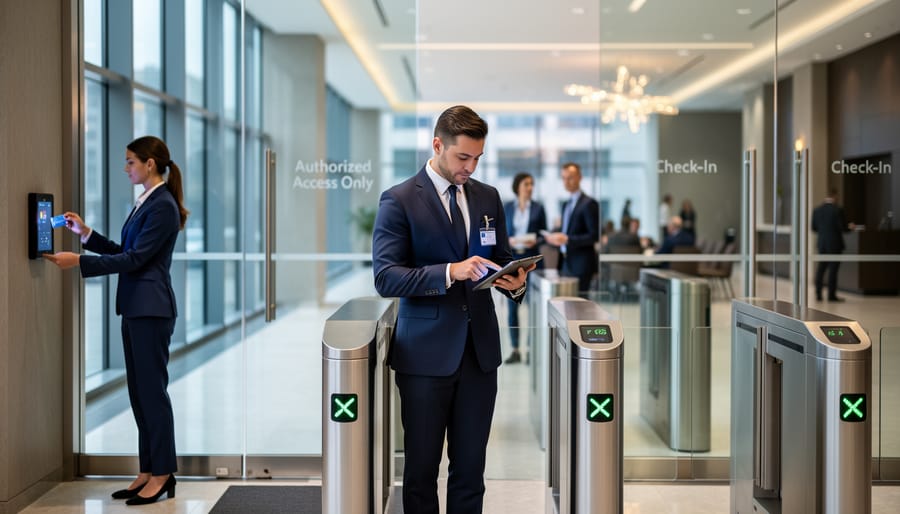
Effective confidentiality begins with venue assessment. Select spaces offering controlled access points, minimal foot traffic from unrelated events, and soundproofing adequate for sensitive discussions. Private boardrooms in business centers typically provide better security than hotel conference rooms with adjoining public areas. Consider venues where you can restrict elevator access or secure an entire floor.
Technology safeguards require multi-layered protection. Implement password-protected registration systems, encrypted communication channels for pre-meeting materials, and signal jammers when discussions involve proprietary information. Disable location services on event apps and require attendees to use secure networks rather than public Wi-Fi. For high-stakes gatherings, conduct electronic sweeps to detect recording devices.
Attendee verification should extend beyond name confirmation. Establish photo ID requirements, create verified attendee lists cross-referenced with organizational databases, and issue unique access credentials that can’t be transferred. Pre-screen guests through invitation-only registration, and position staff at entry points to verify credentials personally. For maximum discretion, avoid displaying attendee names publicly and consider using coded identification rather than visible name badges.
Logistics That Support Discretion
Planning discreet logistics requires attention to details that most standard events overlook entirely. The moment attendees arrive sets the tone for privacy, dedicated entry points away from main lobbies prevent unintended visibility and awkward encounters with unrelated building occupants. Some venues offer private elevators or back-of-house access routes that bypass public spaces altogether.
Registration processes demand similar thoughtfulness. Rather than public check-in tables, private meetings benefit from pre-verified guest lists distributed to security or reception staff. Digital check-in via mobile apps eliminates physical sign-in sheets that others might see. When physical badges are necessary, using attendee numbers instead of names provides additional protection.
Non-disclosure agreements aren’t just legal documents, they’re planning tools that clarify expectations from the outset. Distribute NDAs during registration confirmation rather than at the door, giving participants time to review terms without creating bottlenecks or awkward moments at entry.
Communication channels require equally deliberate control. Establish private email threads or encrypted messaging platforms exclusively for attendees. Avoid public calendar entries that reveal meeting existence; use coded titles or omit descriptions entirely. Even seemingly minor elements like directional signage should use generic language rather than broadcasting meeting content or organizational affiliations. Room assignments might reference codes or numbers instead of company names or project titles that passing observers could notice.
Strategic Planning Framework for Private Meetings Across Sectors
Private meeting planning varies dramatically across sectors, each requiring distinct approaches that reflect organizational culture, stakeholder expectations, and strategic objectives. Understanding these sector-specific nuances determines whether a private gathering achieves its intended outcomes or falls short of expectations.
Corporate organizations typically structure private meetings around strategic decisions, executive retreats, confidential negotiations, and sensitive personnel discussions. Their planning framework prioritizes efficiency, technological infrastructure, and business continuity. Executives expect seamless experiences where logistics become invisible, allowing focus on high-stakes discussions. Corporate planners integrate real-time collaboration tools, secure video conferencing capabilities, and immediate access to business intelligence systems. Venues must accommodate shifting agendas while maintaining absolute discretion about attendee identities and discussion content.
Community groups approach private meetings with different priorities, balancing inclusivity within defined membership boundaries against protecting vulnerable populations or sensitive local issues. These organizations convene private sessions to address neighbourhood concerns, strategic advocacy planning, or stakeholder alignment on community development projects. Similar to urban planning events community private meetings require accessible venues that signal trust while providing necessary confidentiality. Success hinges on creating safe spaces where participants speak candidly without fear of external exposure or political repercussions.
| Sector | Common Private Meeting Purposes | Unique Considerations | Optimal Venues |
|---|---|---|---|
| Corporate | Executive strategy, M&A negotiations, sensitive HR matters | Technology integration, executive amenities, business-class standards | Boutique hotels, private boardrooms, executive retreat centres |
| Community Groups | Advocacy planning, stakeholder alignment, sensitive local issues | Accessibility, trust-building environment, neutral territory | Community centres, libraries, municipal facilities |
| Cultural Institutions | Donor cultivation, board governance, collection acquisitions | Inspiring atmosphere, cultural relevance, donor privacy | Museum spaces, gallery rooms, heritage venues |
| Environmental Associations | Strategic partnerships, research collaborations, policy development | Sustainability alignment, field access, scientific credibility | Research stations, nature centres, eco-lodges |
Cultural institutions leverage private meetings for donor cultivation, board governance discussions, and confidential acquisition negotiations. Their framework emphasizes creating inspiring atmospheres that reflect organizational mission while protecting donor privacy and maintaining competitive advantage in acquisitions. These meetings often blend aesthetic excellence with functional requirements, selecting venues that reinforce cultural values.
Environmental associations structure private meetings around research partnerships, policy development sessions, and strategic conservation planning. Their planning framework aligns with sustainability commitments, often selecting venues that demonstrate environmental principles while providing necessary meeting infrastructure. These organizations balance scientific rigor with collaborative approaches, creating environments where diverse stakeholders reach consensus on complex ecological challenges. Certified planners adapt frameworks to sector-specific requirements while maintaining core privacy and quality standards across all applications.
Critical Success Factors: What Separates Effective Private Meetings from Failures

The difference between a private meeting that drives meaningful outcomes and one that falls short often comes down to four interconnected factors that certified planners systematically address.
Stakeholder alignment before the first invitation determines whether participants arrive prepared and engaged. Effective private meetings begin with thorough pre-event consultations that identify each attendee’s priorities, potential concerns, and desired outcomes. When planners skip this groundwork, meetings devolve into competing agendas and unproductive tangents. Professional planners conduct discrete stakeholder interviews weeks before the event, ensuring the agenda reflects genuine priorities rather than assumptions.
Clear, measurable objectives transform vague gatherings into focused sessions. The most successful private meetings define specific deliverables, whether that’s a signed agreement, an approved strategy, or consensus on three key decisions. Without this clarity, even well-attended meetings drift toward superficial discussions that require follow-up sessions. Certified expertise ensures objectives are realistic, time-bound, and communicated to participants in advance so preparation becomes purposeful.
Technology integration matched to need represents another critical divider. Failures often stem from either over-relying on complex systems that create barriers or under-utilizing tools that could enhance collaboration. The right approach assesses participant technical comfort, confidentiality requirements, and interaction goals, then selects platforms accordingly. Strategic meeting planning balances accessibility with security, ensuring technology serves the conversation rather than dominating it.
Post-meeting follow-through determines whether decisions translate into action. Effective private meetings conclude with documented commitments, assigned responsibilities, and scheduled accountability checkpoints. Professional planners distribute concise summaries within 24 hours, capturing decisions and next steps while momentum remains high. They also establish discrete communication channels for ongoing coordination, ensuring confidential discussions continue productively beyond the meeting room.
These four factors compound. Strong stakeholder alignment enables clearer objectives, which inform appropriate technology choices, which facilitate better follow-through. Certified planners recognize these interdependencies and build comprehensive frameworks that address each element systematically.
Cost-Effective Solutions Without Compromising Privacy or Quality
Strategic budget management for private meetings requires understanding that cost-effectiveness isn’t about cutting corners, it’s about intelligent resource allocation that preserves both confidentiality and professional standards.
Venue selection offers significant savings opportunities without sacrificing privacy. Consider boutique hotels during off-peak periods, which often provide dedicated spaces at reduced rates while maintaining the discretion larger properties offer. Executive suites in business centers typically cost 40-60% less than full conference facilities yet deliver comparable privacy with built-in amenities. University conference rooms and private dining spaces at established restaurants present additional alternatives that naturally limit public access.
Technology investments demand careful calibration. Rather than purchasing proprietary secure communication platforms for a single event, certified planners leverage encrypted solutions with flexible licensing. Cloud-based meeting management tools with enterprise-grade security eliminate hardware costs while ensuring data protection. The key is matching technology scope to actual security requirements, many private meetings don’t need military-grade encryption but do require reliable access controls and audit trails.
Staffing optimization begins with cross-trained team members who handle multiple responsibilities efficiently. A professional coordinator who manages both logistics and confidentiality protocols delivers better value than hiring separate specialists. For larger gatherings, selective outsourcing, bringing in security professionals only for critical phases rather than the entire event, controls costs while maintaining protection standards.
Resource consolidation generates substantial savings. Combining catering, audiovisual, and accommodation contracts with a single venue provider often yields 15-25% discounts. Digital materials eliminate printing costs while reducing information security risks. Pre-event virtual briefings reduce travel expenses for planning teams without compromising preparation quality.
The most cost-effective approach involves early planning, which expands negotiation leverage and prevents expensive last-minute solutions that compromise either budget or privacy standards.
Professional private meeting planning has evolved far beyond basic logistics and venue booking. Organizations that recognize this shift, and invest in certified expertise, consistently achieve outcomes that reflect their strategic priorities while maintaining the discretion their initiatives demand.
The difference between adequate and exceptional private meetings lies in understanding that confidentiality, stakeholder alignment, and purposeful design cannot be improvised. Whether you’re coordinating a board retreat, facilitating sensitive community consultations, planning cultural strategy sessions, or convening environmental stakeholders, the complexity demands specialized knowledge and proven protocols.
Strategic innovation in private meeting planning means anticipating challenges before they surface, implementing security measures that feel seamless rather than intrusive, and creating environments where meaningful dialogue flourishes. Certified professionals bring systematic approaches that address every dimension, from pre-event stakeholder analysis to post-meeting follow-through, ensuring nothing falls through the cracks.
Your organization’s private meetings represent critical moments for decision-making, relationship-building, and strategic advancement. They deserve the same rigor and professional attention you apply to your most visible public initiatives. By adopting a comprehensive meeting planner framework and partnering with experienced professionals, you transform private gatherings from logistical exercises into strategic assets that deliver measurable value across both public and private sectors.